An Andalusian art on an Atlantic island
Flamenco in the Canary Islands
Why flamenco is an Andalusian art, what the islands' own music sounds like, and where Cuba and Tenerife's visitors fit into the story.
Reserve a seat at Casa Ábaco ↗Flamenco comes from Andalusia
In UNESCO's entry, flamenco's home ground is Andalusia in the south of Spain, with roots reaching into Murcia and Extremadura; the art joined its register in 2010. Nothing in that description points to the Atlantic. So when you watch flamenco in Puerto de la Cruz, you are watching an art from the Spanish mainland, performed on an island with its own musical traditions. That is not a flaw. It simply tells you what to expect: Andalusian song, guitar and dance, not Canarian folklore.
The islands have their own music
Wikipedia calls the isa the best-known and most characteristic of the islands' traditional genres, a local variation of the jota with much variation between islands. In some places a leader directs the dancers into an increasingly complex chain. The tajaraste probably inspired the Canary dance, which spread across Europe around the end of the 1500s and the start of the 1600s. The folía and the malagueña are listed among the islands' popular dances. These forms have their own rhythms and their own steps, separate from flamenco's palos.
The timple
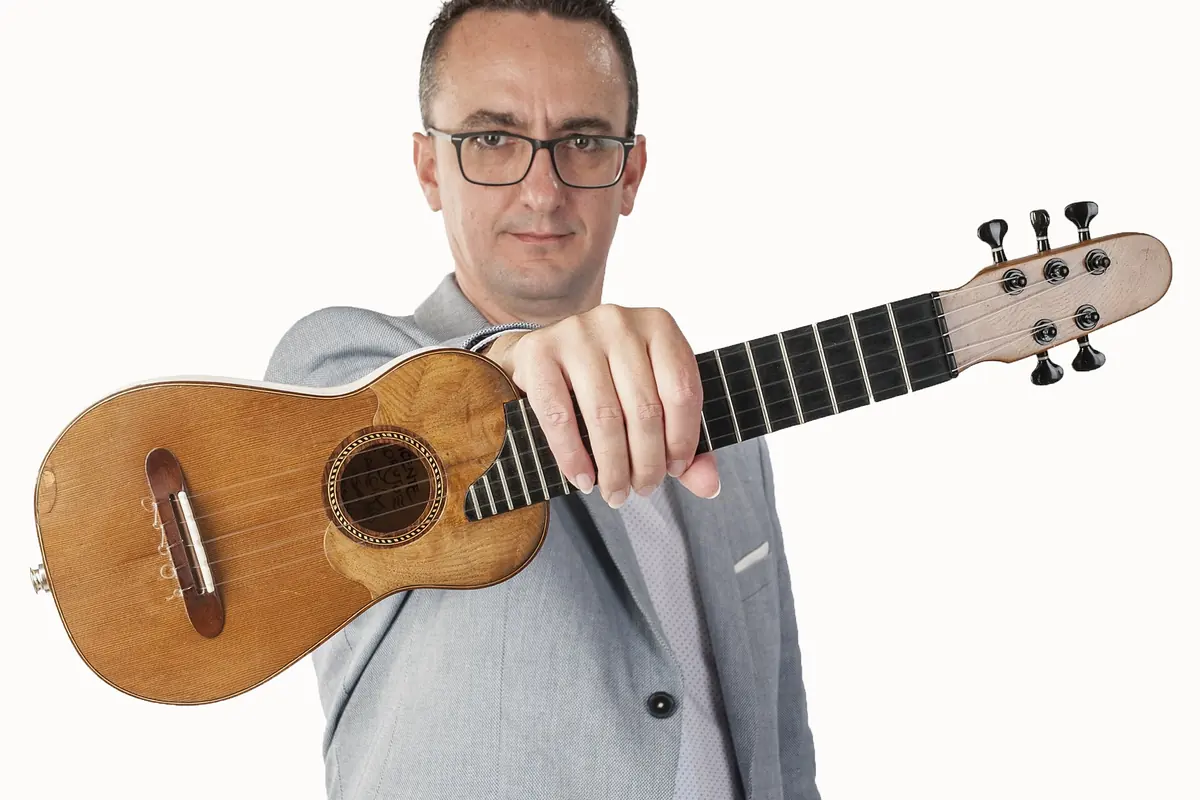
The instrument most associated with Canarian folk music is the timple, described as a traditional five-string plucked instrument of the islands, with manufacture beginning in the 19th century. Some players on La Palma and in northern Tenerife leave off one string and play a four-string version, which five-string advocates consider less traditional. The timple is described as similar to a ukulele, and it is a different instrument from the flamenco guitar, which is built lighter and slimmer than a classical guitar.
The Cuban thread
Wikipedia notes a strong connection between Canarian music and Cuban music, and ties to other Caribbean traditions through commerce and migration. Flamenco has its own Cuban connection. The cantes de ida y vuelta, the round-trip songs, are flamenco forms that began in an exchange with Latin America, mainly Cuba, and came back to Spain; the guajira, based on the Cuban punto guajira, is the standard example. Both traditions carry Cuban influence, in different forms.
Read next: Flamenco explained for first-timers
A coast that welcomed visitors early
Wikipedia says the Orotava Valley and Puerto de la Cruz were among the first holiday resorts in the Canary Islands. Visitors in the early 19th century included William Wilde, Alexander von Humboldt and Sabin Berthelot, and the real tourism boom came in the 1950s. British residents built the Anglican All Saints Church, and the town has the oldest Anglican cemetery in the Canary Islands. A town with that history of foreign visitors is a natural home for an evening aimed at them.
What you are actually watching
At a show such as the one at Casa Ábaco you will hear cante, watch baile and listen to toque, the three crafts UNESCO identifies. You are not watching a Tenerife folk dance. The building, however, is Canarian: a mansion in the island's own style, in wood and whitewash. The mix of Spanish art and island setting is what makes the evening distinctive, and it is the reason the show is worth planning around.
Hearing the islands' own sound as well
If you want the Canary Islands' own music on the same trip, look for performances billed as Canarian folklore, where you are likely to meet the timple and dances such as the isa and the folía. They are a separate evening from a flamenco show, with different instruments and different rhythms. Hearing both in the same week is the quickest way to learn the difference by ear.
Who this isn't for
If you came to Tenerife hoping to hear flamenco as an island tradition, a flamenco show will not deliver that, because the art is Andalusian. If you are after folk dancing in regional costume, the Canarian folklore route will suit you better. And if you want the most traditional Andalusian setting, a show in Andalusia itself will always be closer to the source than any on the Atlantic.
Sources